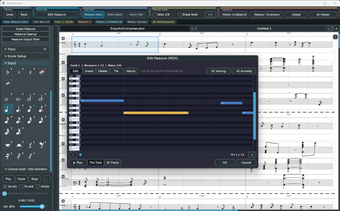
ArkComposer: MCP server to let LLMs generate and edit music
ArkComposer, developed by Arkark2010arkark, is an MCP server that connects large language models to music composition and editing workflows. The app lets AI agents create music from descriptive text prompts and apply structured edits while exposing programmatic project management endpoints. Key functionality includes MCP compatibility with clients like Claude Desktop, metadata and asset organisation, and Node.js integration for custom setups. It targets AI developers and creative technologists who need assistant-driven music production in MCP-enabled workflows.
What tasks can you actually use it for?
The tool provides a standardized interface so language models can perform music-focused actions, including prompt-driven composition, structured modification of existing pieces, and organisation of multiple musical assets. It exposes a set of programmatic operations that map conversational commands to music production actions, which helps agents manage technical parameters and metadata for projects. This design focuses on converting natural-language intents into tool calls that operate on musical data structures.
How dependable are generated and edited outputs for creative work?
ArkComposer acts as a bridge between assistants and music engines rather than producing final audio by itself, which means output fidelity depends on the destination generation model or service the tool calls. Its role is to reduce API complexity and translate commands, so quality and stylistic control reflect the connected music backends and any post-processing done outside the server.
What inputs and environment does it require?
Using the app requires a host environment that supports the Model Context Protocol, such as configuring the server inside a Claude Desktop setup or integrating via Node.js for custom implementations. The server accepts conversational requests routed by MCP-compatible clients and manages project-level metadata and assets, so users must run it where MCP messages are routed to the executable or script.
Does it fit developer workflows without excessive overhead?
Its open-source architecture supports code inspection and community contributions, which helps developers adapt endpoints and extend behaviour. Integration is configuration-driven, for example adding the server entry to a compatible client's configuration file, so engineers familiar with MCP and basic server setup can incorporate it into assistant-driven pipelines. The project is recognised within the MCP developer community as a practical utility.
Practical for MCP-savvy teams who accept external dependencies
ArkComposer is a practical option for AI developers and creative technologists who need programmatic control of music workflows through conversational assistants. Because it typically forwards requests to external music generation services, the final audio and stylistic fidelity depend on those connected models. Use the tool to automate API orchestration and metadata handling, and plan for human review or downstream mixing before release-quality delivery.
Pros
Native Model Context Protocol interface for LLM-to-music workflows
Structured editing and project-level metadata management
Open-source codebase enabling community inspection and extensions
Integrates with Claude Desktop and Node.js-based setups
Cons
Final audio quality depends on connected music generation services
Requires an MCP host environment configured by the user
Focused on MCP niche, fewer mainstream DAW integrations
Laws concerning the use of this software vary from country to country. We do not encourage or condone the use of this program if it is in violation of these laws. Softonic may receive a referral fee if you click or buy any of the products featured here.